
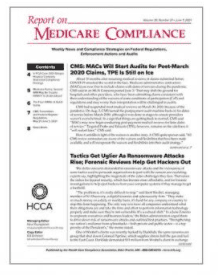
Medicare Forms: Second IMM & the HINNs
Check out Phoenix Medical Management's latest contribution to the Report on Medicare Compliance regarding all things associated with the Medicare forms.
Phoenix Medical Management had the opportunity to contribute on the Report on Medicare Compliance regarding how to understand Medicare notices;
The IMM- Important Message from Medicare
The MOON- Medicare Outpatient Observation Notice
HINNs 1-12- and why we know longer have HINNs 2-9
DND- Detailed Notice of Discharge
For more information feel free to check out our article "Medicare Forms: Second IMM May be Trouble; HINN 11 is Underutilized and the Four HINNs: A Quick Guide. As well as other great information regarding staying up to date with all things Medicare.
Details and education regarding the notices is also delivered in our Fundamentals of Utilization Review Course

Understanding Hospital at Home
Review the new provisions and how to participate in the Hospital at Home program. This article published for RACmonitor, https://www.racmonitor.com/understanding-hospital-at-home describes how this program can help in a FFS and value based world.
This is a concept introduced by CMS to address surge capacity by providing acute-care services in the home setting.
Not to be confused with the Hospital to Home program for readmission prevention, the Hospital at Home waiver (aka Hospitals without Walls), introduced by the Centers for Medicare & Medicaid Services (CMS), is a concept introduced to address surge capacity by providing acute-care services in the home setting. To assist the nation in dealing with COVID-19, CMS unveiled the program in March 2020 to allow hospitals to transfer patients to outside facilities while still receiving payments under Medicare fee-for-service (FFS) guidelines. This allowed for greater flexibility of hospital sites and treatment centers to include non-traditional locations. After the success of this program, in November 2020, CMS introduced the Acute Hospital Care at Home program to permit treatment of approximately 60 different medical conditions, such as asthma, congestive heart failure, and pneumonia, to be managed from the patient’s home.
To obtain approval for this program, hospitals must apply for the waiver through CMS. Hospitals will need to ensure 24/7 availability, and in-home nursing services will be evaluated by CMS to determine if applicants are reasonable candidates. All patients referred to this program must come through the emergency room or inpatient hospital setting. Patients must be screened for medical and environmental factors to ensure that they qualify for enrollment. A registered nurse (RN) must evaluate the patient once daily in person or remotely, and two in-person visits must occur daily by either an RN or paramedic. CMS requires that participating hospitals provide monthly reporting measures, which include patient volumes, escalation rates, mortality, safety metrics, and patient lists.
To date there are 56 health systems and 129 hospitals in 30 states that are providing such services. Although this program is slowly growing, many health systems across the country are still unaware of Hospital at Home’s existence – or how to even get the program going. During the middle of the pandemic, it may have been a difficult time to consider how to build such an innovative concept. Granted, the telehealth movement went ahead with full force, but many health systems had years to prepare for telehealth and were just waiting for the payment structure to open the doors to care delivery. But sending patients home after they come in to the emergency department and are hospitalized, instead of keeping them in the hospital, is a whole new construct. Which team members need to be involved? How do you assess which patients are appropriate to include? What are the risks? How do you get the proper equipment? Where are the nurses or paramedics who will care for these patients? There are so many pieces to put in place, which may seem like more work than some health systems are ready for. However, if you are with any hospital that has difficulty with full beds, peak hours, or throughput, this is really the answer. If you are with any health system that is in a value-based arrangement, this is an opportunity to reduce cost of care.
In talking with health systems that have figured out how to make this work, a key point identified is that any entity considering it will need clear physician buy-in, support, and understanding for how the program benefits the patient and the hospital, especially during hospital surge capacity scenarios. Physicians will need care pathways for appropriate patient referrals from the emergency room, with clear directions on who to call and what can and cannot be managed in the home. Physicians will then be responsible for providing telehealth to the patients as their home turns into a virtual nursing unit.
Case management has been pulled into many programs across the country to provide the environmental and psychosocial assessment and management. To be considered appropriate, patients must live in a supportive and clean environment that allows for medical treatment and nursing visits. Once determined appropriate, the patient is then transferred back to their home and arrangements are made, typically through a third-party company, to provide the needed equipment, medication, and home supplies for treatment. Necessary testing and treatment is completed either in person or via telehealth from the medical team. Once the patient has completed acute treatment, they are discharged from the program (although already home), and returned to the care of their primary care provider.
Although a new concept and easily reimbursable under the FFS structure with CMS, Johns Hopkins has been providing this service since 2015, and Presbyterian Hospital in New Mexico has been providing it since 2008 under its own health plan. However, like telehealth, with CMS opening the payment model, health systems have started to see program benefits to treating and managing patients in the comfort of their own homes – and at a significant cost savings.
Still in its infancy, this program offers the ability to maximize bed capacity at a reduced cost, leveraging both FFS and value-based gains.

Connection in Revenue Cycle Improvement
Phoenix Medical Management was able to participate with a small group of experts to discuss how to evaluate and improve the CDI world. Jim shares his white-paper on how an outsiders prospective for process improvement can be applied to clinical documentation integrity.
Phoenix Medical Management was able to participate with a small group of experts to discuss how to evaluate and improve the CDI world. Jim shares his white-paper on how an outsiders prospective for process improvement can be applied to clinical documentation integrity.
The mission of any hospital is patient care. However, there is another component of the hospital; the business aspect. To ensure the integrity of care and appropriate reimbursement, documentation is crucial. The patient story, initial diagnosis, tests being ordered, medication given, test results, revised diagnosis, physical therapy, diets, patient progress or lack thereof, etc. needs to be properly documented. All this information resides in an Electronic Medical Record (EMR). Everyone that has anything to do with a person’s care has to properly document anything to do with their care.
That EMR is also used on the business aspect of the hospital as it was originally designed to be a billing tool. Since it contains everything there is to know about a person’s stay, it serves as the basis for proper coding for billing purposes. Only accurate coding will translate into getting paid for the services rendered.
Hospitals and health facilities are constantly dealing with payment issues for a multitude of reasons. Insurance companies are constantly denying payments and based on their contracts and standards, they have that right.
As a process engineer, problems have always intrigued me. Why is this challenge happening? Why can’t it be rectified or even prevented? And again, there are a multitude of reasons. As I have been told so many times, it’s complicated with a lot of moving parts. Every situation is unique. The list goes on.
To get a better understanding of the situation, I wanted to have a small team of people living with the problems and brainstorm a solution. I’ve learned that people living with the problem are extremely creative. They will always find a way to fix the problem. Their knowledge of the process is priceless.
However, as much as they can help, unknowingly they can also impede improvement. They are so involved on the tasks and functions that they might not have the ability to see the overall picture. As a process improvement specialist, I see the entire picture from a 10,000-foot view and, from the old expression, I can see the forest through the trees from that view. The staff doing the work are so entrenched in the trees that they do not have the ability to see the entire forest and can’t simplify the situation. And on the other hand, I see the forest but too far away to see all the trees, which is the actual details. It is that challenge of the different views that sheds the light for improvement. The team learns to take a step back to provide a better clarification.
I would like to compare my participation as a coach on a football team. As you know, the players
play the game and as a coach, I don’t. However, I have the ability to sit in the press box and get an overall view of the entire field. I can see things happening that they can’t. Working together, we can make the right changes to win the game.
With the help of a few people, a team was created. Here are those members:
• Tiffany Ferguson, LMSW, ACM
Chief Executive Officer at Phoenix Medical Management, Inc
• Jennifer Foskett MBA, RHIA, CPC
Healthcare revenue integrity analyst, healthcare business intelligence analyst
• Sonal Patel, CPMA, CPC, CMC, ICD-10-CM
Healthcare Coder and Compliance Consultant at Nexsen Pruet, LLC ? Podcast Creator and Host for the Paint The Medical Picture Podcast series
• Dr. John Zelem
Physician Owner at Streamline Solutions Consulting, Inc
As with any process, regardless of the industry, I have found that a successful process must have the following criteria, which I call MPDT.
M - Mission
P – Prevention
D - Dashboard
T – Teamwork
In our initial meeting, each person was asked to provide their view of the problem, which was:
• Trying to quantify problems, where they occur and to get people to recognize them.
• Utilize standardization, and accountability and silos
• Identify silos as they exist
• There are very convoluted systems and too many people
• No accountability, no control, lack of communications and coordination
The team agreed to the following mission statement: “Fostering documentation integrity in pursuit of capturing the patients’ clinical story”.
The following is a list of players in the process and their role:
Utilization Specialists – work to review the medical necessity in the documentation and recommend level of care for patient in the hospital
CDI – (Quality Assurance) assures that the quality of the documentation provided supports the codes that are used for billing
Case Managers – responsible for the navigation and coordination of the progression and transition of patient care
Physician Advisor – provides expertise to all of the mandatory components as a clinical resource bridging the gap between clinical and non-clinical aspects and aids in the recommendation for level of care beyond commercial criteria
Coding – converts documentation to supportable codes
Physicians – provides, directs, and evaluates the medical care of the customer and documents and communicates this appropriately in the medical record
Nursing – performs and helps to carry out the patient care, insuring that physician orders are carried out, helping the patient and family navigate throughout the hospital encounter and document appropriately – can include Wound Care initial and follow-up care including documentation
Central Business Office (CBO) – review claims and insure that they are accurate at the time of billing at the back end and paid appropriately in compliance with the UB-04, they are the clearing house for denials of payments
Quality – assures that everything occurs at the highest standard of evidentiary practices (excluding medical records)
Compliance - obeying regulations, standards, orders, rules, or requests and the state of being willing to do the right thing, having integrity and assuring accountability to meet those standards of the medical record (auditing)
IT/Informatics/Analytics – managing the EMR and the security such as HIPAA regulations
HIM/Medical Records – repository of the medical record, overseer of policies regarding the EMR
Advanced Practice Providers (APP) – physician extenders providing a lot of the care and documentation
Dietary – assess and manage malnutrition and other disease states and documents accordingly
PT/OT - assess and manage and documents accordingly, contingent on patient’s clinical condition
Speech - assess and manage and documents accordingly, contingent on patient’s clinical condition
FINDINGS
Everyone tries to do their job to the best of their ability, which includes all the necessary investigation and rework to ensure quality patient care and accurate documentation that coded properly for billing purposes.
The number of queries can range from typically 20-40 per day.
CDI reports tends to monitor tasks rather than the impact of their work.
Coding:
• Complicated and not standardized
• Good coders know they need to do their due diligence when assigning codes
• Tends to be reactive and not proactive
The problems typically start with the onset of documentation. It became abundantly clear that doctors typically do not document well in a hospital setting. There are many possible reasons for this in deficiency, such as:
• It is not taught in medical school
• Doctors are more concerned on care and less on documentation
To further complicate the issue of documentation with doctors, many times the executives of a hospital are not willing to address the issue. Simply talking about a problem isn’t addressing the issue. To address an issue, there has to be follow-up and consequences. Simply put, if there isn’t a consequence for speeding, why would people stop speeding?
However, this is a double-edged sword for hospitals. I’m sure they want to hold doctors more accountable but if they become too strict, the doctor just might take his/her services to another hospital. This will have a significant bearing on hospitals regarding both financial and reputation. It would take a concerted effort by many hospital communities to rectify that situation. Another possible solution is either medical school or government mandate, which will not happen anytime soon.
Unfortunately, the major emphasis seems to be correcting the problem and very little effort on prevention.
POTENTIAL SOLUTION
To alleviate the problems, we need to focus on Prevention, a Dashboard and Teamwork. People tend to concentrate on issues that are both Important and Urgent. Things that are a crisis, pressing problems, and deadline driven issues. Actually, people that continually work out of this quadrant are considered to be urgent dependent.
For a proactive approach, you need to prioritize your efforts on important issues that are non-urgent as outlined in quadrant II above. Topics that fit that criteria are preparation, prevention, planning, true re-creation and empowerment.
Everything listed in that quadrant are very important but as you can see, none of them are urgent. Nothing listed in that quadrant are deadline driven, a pressing problem or a crisis. However, concentrating on the topics listed in quadrant II will make your organization that much better and in time will actually reduce the items that are presently urgent.
It takes both determination and a concentrated effort to shift both your focus and others to these topics. Plus, all the pressing problems and deadline driven items will eventually consume your attention once again. However, I highly recommend that you schedule an hour a day to these topics. As time permits, try to increase your time.
PREVENTION
Concentrating on prevention is the first step. Problems are constantly popping up, especially when 20-40 plus queries occur daily depending on the size of your facility. We know these problems are being fixed but unfortunately, the next step, being prevention doesn’t occur. In essence, the urgency has been satisfied because the problem has been fixed. So, off to the next problem.
For continuous improvement, it is important to take the next step when the problem has been resolved. Simply ask, what can be done to prevent future occurrences of that problem. And one of the canned answers is that it does not happen that often. Well, that can’t be the answer for 40+ queries.
It is important to log the problem, corrective, and the prevention action. It will come into play in the future. People will remember problems when they re-occur, and it will be a great reference to see what corrective and preventative action was done in the past. In fact, knowing previous preventative action that didn’t resolve the actually problem, will be instrumental to hone in on the root cause of the problem.
Correcting a problem is just that. Doing what is necessary to correct what is wrong. For example, coding doesn’t know what the correct code is to ensure payment. The appropriate people get together and correct the record so it can be coded properly.
However, what was the root cause of the problem? What caused the problem in the first place? That’s what preventative action does. It forces us to find the root cause of the problem and implement action to fix it. Only then, will future occurrences be stopped.
DASHBOARD
A simple dashboard tracking a couple phases of queries should be created. It needs to track the quality of the system and is the pulse of the situation. Based on the information extracted from the brainstorming session, the initial tracking item should be queries and it should consist of the following:
• Queries issued per day
• Queries resulting in a correction per day
• Queries where prevention was investigated, and action taken
The quantity of suggested items can vary from day to day. Therefore, I would also track the total quantity on a weekly basis and create a line graph. This will allow for trend analysis. Are things getting better, worse or staying the same.
The dashboard is a work-in-process and might require changes once data is being captured.
TEAMWORK
Teamwork is crucial to the success of continuous improvement. Coaching is also important but again, it is the team that wins the game.
The team I am proposing is not a department team. I am referring to cross departmental teams. The team should comprise of the people that can actually work the goal. Each department has their responsibility to insure everything comes together as a whole.
The personality composition of these teams is very important. You need a mixture of all four types.
D – Dominance
Decisive, organized, optimistic, and strong willed. Very task orientated
I – Influencing
Easygoing, witty, optimistic, and outgoing. Highly relationship oriented
S – Steadiness
Pessimistic, soft-spoken, and artistic. Good at analyzing and goal oriented
C – Cautious
Pessimistic, strong-willed, and soft spoken. Good analyzers
The inspirational person is needed to celebrate the victories. The cautious and steady person is needed to ensure the quality. They are good at analyzing the data. The driven person is needed to ensure the process runs properly and meets the daily requirements. The important thing to remember is that each personality sees the task at hand differently. Working together, they will accomplish a great deal.
The brainstorming team created two teams; consensus and escalation. The consensus team will have weekly meetings and consist of the following areas:
• Coding
• CDI
• Denial team
Note: the members of the team will be the people actually doing the work and working managers
The consensus team will request ad hoc members as needed, which are:
• Clinical staff – nursing, physicians, physician advisors
• Directors
• Regulatory
• Revenue Integrity
• Quality
Purpose of the team and meeting:
• Review the amount of queries
• Review the amount of repetitive queries
• Review the method or resolution in correcting the problem
• Most importantly, review preventative action and its effectiveness
• Ensure preventative action has been implemented
For those issues that could not be resolved by the consensus team, they will be sent to the escalation team. The sole purpose of this team is to resolve the issues that the consensus team could not.
This team will meet as needed and will consist of the following:
• Working managers from the consensus team and the directors of those areas
Both the working managers and directors will request ad hoc members to the meeting as required. The ad hoc members will consist of the same areas as listed for the consensus team.
POTENTIAL DRAWBACKS
As with anything, there are always drawbacks with the two biggest being “change is hard to implement” and “avoiding conflict”. And both are viable concerns. Change is hard to implement. Everyone has a comfort zone and implementing change takes you out of your comfort. Secondly, when change is being implemented, conflicts can arise.
Many people do not like challenges, and I get it. But don’t allow challenges to start the “blame” game. Placing blame doesn’t fix anything. Others are conflict averse and don’t confront the problem or people, so nothing changes. Stick to the facts of the situation. Only when you exhaust all other possibilities is it time to look at the operator.
SUMMARY
It all starts with keeping your eye on the mission, which is the integrity of patient care and appropriate reimbursement. And it all starts and end with documentation. Accurate documentation is the vehicle for success.
Refocusing efforts is key to making this happen. Change the focus from fixing the problem to preventing it. Over time, the problems will be eliminated. Step back and schedule time each day for prevention. Besides fixing the problem, take it another step further and determine how to prevent future occurrences of the same problem.
Refocus data collection to support the mission. Task oriented data only monitors quantity, which doesn’t support the mission. Instead, collect data that monitors the quality of your process and documentation. Monitor preventative action. How many problems have been prevented from happening again? How many problems re-occurred even after the preventative action was implemented? Monitor the success of the mission.
And most importantly, build cross functional teams. Trust and empower the team to do the right thing. Coach them. Remove the barriers that hinder them. The people that do the work is the key. They know the problems. Help them refocus on prevention.
If possible, have someone oversee things from a distance. Like a drone, they see more. Questions need to be asked. Challenging others can be uncomfortable but done correctly, it inspires creativity.
So, if you are unhappy with what you got, then change. And if that change didn’t work, then change again.

Leading Case Management during lock down
The isolation and experience of COVID is something that will unite us all as something we will never forget. Marie shares her accounts while hospitals were on lock down, what leading a case management program was like.
Leading case management during COVID-19, a personal story and reflection on the last year. Originally published for RACMonitor, https://www.racmonitor.com/as-hospitals-locked-down-others-have-been-locked-out
Towards the end of the most recent COVID-19 surge, an employee working from home mentioned how isolated they felt, and how lucky I was to go into work every day. That sat with me for a minute before I responded, while also acknowledging how difficult this past year has been for everyone.
My response was this: I have worked in the hospital every day since the pandemic began, which has also felt isolating, but in a vastly different way. The hospitals have been on lockdown. We have been locked in, and the rest of the world has been locked out. We have cared for the sick and the dying. We have held their hands, listened to their stories, and known that the very sickest would likely die alone. Nurses would not be at most bedsides while someone passed, because these nurses were in other rooms working to save those still fighting to survive.
The case management teams have not been excluded from the isolation and heartache. Inpatient case managers have remained in the hospitals while the outpatient case managers, utilization review specialists, and other associated teams have worked from home. Several emergency room social work case managers, who have worked in the EDs during the pandemic, have chosen to move out of their homes during the COVID surges to be away from their spouses and children, in order to protect their families. I have coworkers who have not travelled to visit their elderly parents due to their own concerns and family members' concerns that they have a higher risk of contracting the virus due to their roles in the hospital. There were so many unknowns about transmission and preventing the spread that healthcare workers and everyone else were doing all that they could to protect their patients and their families.
A difficult adjustment for case managers has been the change in process to no longer go into patients’ rooms to complete initial assessments and provide care management services. Many hospitals required the inpatient case manager to complete most of their work with patients via phone. Units with COVID patients barred all staff from entering the rooms to decrease the use of personal protective equipment (PPE), which has been in short supply throughout the pandemic. Other units have also reduced entry into rooms, as patients may initially test as negative; however, under further treatment, they are determined to be positive, or their risk is so high for contracting the virus that units could just not take the risk. Therefore, regardless of COVID status, many patient rooms became limited to only direct caregivers.
This has been particularly difficult for our palliative and medical teams during end-of-life conversations – not only because of the sheer volume of those dying during our surges, but families that used to be present during this difficult time are no longer allowed inside the rooms. Unable to understand the depths of illness due to the inability to physically see or touch their loved ones, they are forced to make disconnected decisions.
More recently, limited numbers of family members have been allowed into the hospital at the end of life; however, requirements demand they stay six feet from the door. So many patients were dying alone, with an iPad for family to be present. The effects of this on the medical team has been life-changing and unimaginable, as they must continue to come to work and provide needed care for their isolated patients, knowing that may be the only interaction or human contact their patient is getting while inside the hospital walls.
What has not been visible outside of the hospital is the additional isolation that has occurred to the healthcare team while at work. The cafeterias have yellow caution tape around every other table to prevent team members from sitting too near each other while eating their meals and taking breaks.
Areas that had previously been used for waiting rooms now have small tables spread out so that staff can eat alone while still being near their unit, as lunch in the nursing break rooms is no longer permitted. While all of this may be necessary to slow transmission, it creates additional feelings of isolation during a time when we need each other's support more than ever. Our teams need to be able to laugh and cry and support each other, and the social isolation has made that seem more difficult than ever before.
As leaders in the hospital, we have worked tirelessly to find ways to make the staff feel honored and supported. Hospital systems have created support hotlines and offered counseling and continuous HR involvement to assess employee needs. My hospital system has also held socially distanced events to bring smiles and joy to patients and team members. An example is a parade during the holidays throughout every department in the hospital, consisting of floats made by each department. Staff from the departments decorated them and pushed them through the units, waving and handing out small gifts associated with their themes. Patients could see the floats pass by their rooms, and were greeted with waves and cheer. Patients in the hospital over the holidays had no interaction with family due to COVID, and that parade in particular served as a celebration and human connection.
Understanding the marathon we are in, our teams can still look forward to an opportunity of connection, discussion, and compassion for one another, as we have battled an unexpected war in healthcare. With the continued hope for an increasing number of vaccinated individuals on the horizon and the subsequent decreasing COVID hospitalizations, we can start to breathe again. As leaders, we must remember the secondary trauma experienced by our staff and ourselves, and ensure that we assess for supportive services, engage in needed resources, and remember that we are not alone.
CMS to Resume Surveys
This is a good time to ensure you are ready for CMS to walk through the hospital doors.
CMS Memorandum - CMS has lifted the suspension on hospital surveys
On March 26, CMS announced that they will be resuming hospital surveys. The Memorandum, highlights the new plans for CMS visits to.
Any hospital that had a suspended 30-day survey scheduled
Any new hospital complaints that CMS received since January 20, 2021.
Any hospitals that were under plans of correction related to deficiencies.
Any desk reviews related to open surveys for noncompliance.
Any open enforcement cases to ensure compliance is being adhered to.
If your hospital falls into these general categories, it is a good time to remember how to be prepared for a visit. Please remember to breathe, and then utilize this time to learn from your mistakes to turn them into successes.

Fraud and abuse in the form of free discharge planning
Many case management departments will allow post acute providers to support the discharge process in order to gain referrals. However, this comes at a big risk.
Providers and case managers/discharge planners are in the proverbial "hot seat" with regard to marketing and enforcement activities by the OIG. They must keep up-to-date on these issues.
Hospitals are required to provide discharge planning services. Case managers who provide these types of services and providers that receive referrals from hospitals must be aware of a possible type of fraud and abuse in the form of free discharge planning services. Specifically, there is a federal statute that governs illegal remuneration in the Medicare, Medicaid and other federal and state health care programs. This statute is often called the anti-kickback statute or AKS.
The statute generally says that anyone who either offers to give or actually gives anything to anyone in order to induce referrals has engaged in criminal conduct. Possible penalties for violation of this statute include imprisonment, fines, suspension and exclusion from participation in the Medicare, Medicaid and other state and federal health care programs and civil money penalties. The stakes are, therefore, extremely high!
The Office of the Inspector General (OIG) of the U.S. Department of Health and Human Services is the primary enforcer of fraud and abuse prohibitions. The OIG stated in a Special Fraud Alert, published in August of 1995, that the activities of coordinators and liaisons supplied by providers who want referrals cannot supplant the services of discharge planners. When coordinators and liaisons perform services that discharge planners are supposed to perform, enforcers may view these services as kickbacks to referral sources in the form of free discharge planning services.
Discharge planners/case managers at hospitals and long-term care facilities may want to in enter into written agreements with post-acute providers; such as home care agencies, home medical equipment (HME) suppliers and hospices; to provide coordinators and liaisons. Although written agreements for the provision of coordinators/liaisons are not required, they may be acceptable if appropriately drafted.
Specifically, these agreements, whether written or verbal, must be structured in order to avoid possible kickbacks. Below are some of the potential pitfalls of such agreements that should be avoided:
Agreements should not require providers to keep a coordinator/liaison in the facility on a full-time basis unless the number of referrals clearly justifies the commitment of an employee for this amount of time. Otherwise, this requirement may reinforce the likelihood that this arrangement will be viewed by the OIG as an impermissible kickback or rebate. If the liaisons/coordinators do not provide discharge planning services, there is no need for them to be on the premises on a full-time basis. Rather, an agreement for legitimate coordinator/liaison activities would require them to be available to receive referrals on an as-needed basis only. If providers supply liaisons and coordinators under the proposed agreements on a full-time basis, but do not receive enough referrals to justify assignment of personnel on a full-time basis, it reinforces a conclusion that liaisons and coordinators are really supplying discharge planning services in exchange for referrals.
Agreements to provide coordinators/liaisons should not require them to "develop" and/or "implement an appropriate discharge plan" or to document these activities in patients' charts. Medicare Conditions of Participation (COP's) for hospitals make it quite clear that it is the job of discharge planners to develop and implement appropriate discharge plans.
Agreements regarding liaisons and coordinators should not include a requirement that they must be registered nurses (RN's). It is common practice in post-acute care industries to utilize coordinators and liaisons who are not licensed professionals who perform very effectively in these positions. A reasonable interpretation of this requirement is that liaisons and coordinators must be RN's because they will, in essence, be providing discharge planning services.
Discharge planners/case managers should not propose written agreements for use of coordinators and liaisons that include indemnification provisions. If no free discharge planning services are being provided, there is no need for indemnification.
Hospitals that elect to have written agreements with providers who supply coordinators and liaisons must also be careful to handle compliance with HIPAA privacy requirements appropriately. Specifically, providers who supply coordinators and liaisons should not be required to sign business associate agreements. The Privacy Rule generally defines a business associate as an entity that performs a service on behalf of a covered entity. The OIG is likely to conclude that the services performed by providers as business associates on behalf of hospitals are discharge planning services. The Privacy Rule and related materials also make it clear that providers who receive referrals from other providers are not business associates of referring providers. Such referrals, including information shared in order to make referrals, is part of treatment, payment and healthcare operations of covered entities that do not require consent of patients to disclose.
Providers and case managers/discharge planners are in the proverbial "hot seat" with regard to marketing and enforcement activities by the OIG. They must keep up-to-date on these issues.
©2021 Elizabeth E. Hogue, Esq. All rights reserved.
No portion of this material may be reproduced in any form without the advance written permission of the author

OIG Report: Data brief with concerns for potential upcoding
The OIG found a 20% increase in the number of stays for the highest severity level, nearly accounting for half of all Medicare inpatient spending. At the same time, the average length of stay decreased for these high severity stays.
The Office of Inspector General released a data brief looking at hospital admissions from FY 2014-FY 2019. Their findings recommended CMS to further evaluate a major concern of possible upcoding, specifically for CMS to evaluate a targeted review of MS-DRGs and stays that billed at the highest severity with a lower-than-expected length of stay. Thankfully, CMS has declined an interest to further investigate or target specific hospitals at this time. But that does not mean that they will not come knocking in the future.
The OIG found a 20% increase in the number of stays for the highest severity level, nearly accounting for half of all Medicare inpatient spending. At the same time, the average length of stay decreased for these high severity stays.
Nearly one-third of these high severity stays, lasted a ‘particularly short amount of time’ and more than half only had one diagnosis qualifying them for payment at that level.
To ensure your hospital is compliant, review of your PEPPER Report and discuss at your upcoming UR Committee potential risks. Specifically, self-audit to ensure compliance for any records that are:
Coded at the highest severity level with a short length of stay.
Coded at the highest severity level with only one major complication.

Gatekeepers of the ED
Hospitals can alleviate the difficulty of rework by having experts at all entry points into the hospital, and by deploying a front-end revenue cycle team, which also can function as a strong gatekeeper.
Hospitals can alleviate the difficulty of rework by having experts at all entry points into the hospital, and by deploying a front-end revenue cycle team, which also can function as a strong gatekeeper.
The decision to admit a patient from the emergency department (ED) to a hospital bed is one of the most expensive healthcare decisions. As payers continue to decrease payments for hospitalizations and as more diagnoses move to the outpatient setting, hospital systems need to have more efficient processes in place to decrease unnecessary admissions.
During times of COVID, when hospitals are at capacity, we have seen patient admissions decrease. Although not a new concept, in 2014, Reducing Variation in Hospital Admissions, by Sabbatini, Nallamothu, and Kocher, reported the same trend: that emergency visits resulting in hospitalizations decreased when hospital capacity was up, regardless of diagnosis or geographic location. The largest variation was found in admissions for chest pain, soft tissue infection, asthma, chronic obstructive pulmonary disease (COPD), and urinary tract infections. Despite the spectrum of severity for these diagnoses, a true gatekeeping process for ED admissions does not always exist. Admissions can vary by who is doing the admitting, not necessarily the clinical pathway. To meet appropriate criteria for hospitalization, patients in the ED must have both emergent and necessary treatment that cannot be completed in an outpatient setting. They must then be evaluated for inpatient status by the hospitalist or attending physician to determine appropriate severity of illness, and level of care – and whether that care requires a stay of greater than two midnights for treatment.
In evaluating hospitals across the country, we have seen some common trends that lead to this problem, and it all comes down to the push and pull of the ED physician, the admitting, and the hospitalist. The ED continues to manage by door-to-doc time, and ED-to-admission (or out the door). The ED physician is often pressured to make decisions quickly, and sometimes, when all the evidence is not present or the discharge from the ED is too difficult or untimely, the patient is admitted under observation for the next team to figure out what to do. The patient then goes to the floor, the hospitalist team and care management team evaluate, and then they essentially create a lengthy process of determining what to do next (or ask why this patient was even admitted). Hospitals can alleviate this by having experts at all entry points into the hospital, and by deploying a front-end revenue cycle team, which also can function as a strong gatekeeper.
Your gatekeeper teams should include the following:
Hospitalists for all admissions;
A utilization review specialist with some basic knowledge in clinical documentation integrity as frontline support;
A physician advisor for back-up support; and
A social worker for complex ED cases and social needs.
A utilization review specialist (URS) is trained and has use of programs that identify patients who are appropriate for admissions. The URS can also assist the physicians in the ED to identify the patients appropriate to discharge from the ED. Locating the URS in the ED near the hospitalist will increase communication during the evaluation and allow the physician to ask questions regarding admission status and appropriate documentation. Cross-training this URS with clinical documentation integrity (CDI) can have added benefits, to assist with understanding the clinical truth of the case and what can be documented to ensure an accurate description of why the patient needs to be admitted.
For patients who are medically or socially complex and require additional assistance, a social worker being available during peak hours of the ED (at a minimum) is a true advantage to ED throughput. The social worker can relieve the nurse and physician from the complex work of addressing potential child abuse, adult abuse, or the social determinants of health (SDoH), which can create barriers in the ED. Social workers can refer patients to community support systems and outside resources, so the ED does not become the “safety net” for patient care related to societal issues. Good catches can occur to admit patients to skilled nursing directly from the ED, arrange home health, or coordinate care back to a primary care physician or outpatient specialist, such as urgent ortho. Utilizing the electronic medical record (EMR), social workers can track and alert patients who are potential readmissions to the hospital, and alert the medical team to evaluate if readmission is necessary.
Data-Driven Decisions
A good use of your utilization review (UR) committee is to evaluate data associated with over-utilized resources. Patients who are unnecessarily admitted to the hospital are key factors that can be reported, discussed, and triaged for a new process. Data can highlight variation in admission practices by ED physicians and hospitalists for similar chief complaints. By getting both groups talking and involving the UR committee/case management department, alternative approaches can be tackled to address this scenario: we have this diagnosis, we know they do not belong in the hospital, but we don’t know where else they should go. A great example of this is low-acuity chest pain: patients who require a quick cardiology consult, and potentially a rapid stress test. If the hospital coordinates a fast track for these patients from the ED to the outpatient cardiology office for evaluation of stress tests, the hospitalization can be avoided altogether, saving time for the hospitalist, staff, and on-call cardiologist.
Consider a Clinical Decision Unit
If the patient must enter the hospital, but does not meet inpatient criteria, successful observation management will be key, and is best managed under a true clinical decision unit (observation unit). This tells the patient they are not truly inpatient, but staff can run the unit like an emergency department by tracking patients by the hour, not the day. UR and case management (CM) continue to serve as gatekeepers, and assist the team in evaluating appropriate documentation, severity, level of care, and potential barriers in the progression and transition of care.
During times of COVID, hospitals were forced to really evaluate the necessity of care in the emergency room for hospital admission. However, as history shows us, the healthcare system is not the best at sustaining lessons learned. As beds become more available, those diligent practices are likely to relax. Keeping this time fresh in our minds, to really reflect and implement the good things that came out of medical care, will be valuable as we continue to move to a value-based framework for healthcare.
Maintaining a strong gatekeeping team for your hospital admissions, particularly in the emergency room, will produce a strong front-end revenue cycle management.

How can unit-based leadership improve performance metrics?
On January 12, 2021, Taylor & Francis, published in the Journal of Hospital Practice, the Impact of a hospital unit-based leadership triad on key performance metrics.
The Journal of Hospital Practice released an article on, “Impact of a hospital unit-based leadership triad on key performance metrics.” The team of researchers follows a triad unit that was created at Saint Francis Hospital and Medical Center in Hartford, Connecticut. The triad team consists of the already established dyad- a clinical nurse manager and a lead case manager. They added a hospitalist medical director with the goal to see how this trio could improve various markers such as,
Observed over expected length of stay.
Patient experience
Hand-washing compliance
All-cause 30-day readmissions
Percent of discharges by noon
Percent of discharge to a skilled nursing facility
Interdisciplinary rounds (IDR) are a successful model for improving the care delivery process for patient management and throughput in the progression of care. IDRs ensure that all members are on the same page and speaking the same message to the patient, each contributing their relative discipline. However, rarely do we look at how a leadership-based model could impact with functionality of IDR. In the article, staff participated in morning IDR on the unit and then in the afternoon another IDR was held with leadership present.
The results were as they had hoped. Length of stay decreased, CMI increased, discharge by noon increased, and the discharge to SNF decreased. The other markers are believed to have been not significant due to already having high levels of compliance in hand hygiene and patient experience. Readmissions worsened but were not statistically significant. SFMC should be commended on instilling a positive culture in their care delivery process.
So, how did they do it, because just putting the positions into the role does not make the difference. We are not recommending every hospital follow this same model but there are key components that highlighted to SFMC’s success and should be considered in your own case management and progression of care model.
They added physician leadership into the team process and all members had aligned goals and incentive metrics. Meaning each position is moving in the same direction with the same objectives.
They empowered leadership to address any concerns and ideas brought to their attention related to patient care, safety, or unit workflow. Decisions were not top down but arose from the realities of the front-line worker experience.
Leadership and the units were encouraged to innovate locally in any way they felt would achieve operational improvement. Teams had freedom to work creatively to achieve objectives through trial-and-error models.
The IDRs were focused with an am huddle on barriers to discharge that day and in the afternoon, they huddled for the prep work for the next day and to discuss additional patient insights related to the progression of care. Having leadership involved in the afternoon allowed for support to identify and triage any problems that arise.
If your hospital is interested in discussing further how to incorporate IDR, the triad model, or how to build an ACU. Feel free to contact us for a consultation.

Understanding your Readmissions: How to Reduce Penalties?
Readmissions affect 18.2 percent of Medicare beneficiaries. Article originally posted on RACMonitor at https://www.racmonitor.com/understanding-your-readmissions-how-to-reduce-penalties
Hospitals already suffering from the financial hemorrhage of the COVID-19 pandemic will be hit again by the readmission penalty. More than 2,500, or 83 percent of hospitals in the U.S., will receive reduced Medicare funding for the 2021 fiscal year because of their readmissions from 2016 to 2019.
The penalty per hospital is up to 3 percent, and is dependent on the percentage of readmissions that the facility exceeded, per Centers for Medicare & Medicaid Services (CMS) requirements. CMS continues to include the following six conditions for 30-day unplanned readmission measures: acute myocardial infarction (AMI), chronic obstructive pulmonary disease (COPD), heart failure, pneumonia, coronary artery bypass graft (CABG), and elective hip or knee arthroplasty (THA/TKA). The 30-day readmission period was chosen by lawmakers as a proposed timeframe that readmissions could be attributed to hospital care. The intent of this timeframe is for hospitals to have processes and resources in place to manage patients post-hospitalization.
The Hospital Readmission Reduction Program (HRRP) was created by CMS and put into effect on Oct. 1, 2012, as a progressive effort to encourage value-based measures in our healthcare systems. Readmissions affect 18.2 percent of Medicare beneficiaries, and cost Medicare between $15-17 billion per year. In 2015, Medicare created the Hospital Value-Based Purchasing Program (VBP), which includes the Medicare Spending Per Beneficiary (MSPB). MSPB evaluates the Medicare Part A and B spending for patients three days prior and 30 days after inpatient hospital admissions; thus, a hospital readmission of any cause impacts a hospital’s MSPB ratio. In fact, many commercial payers have followed suit, and have included some type of language in contracts regarding reduced payment or monitoring of hospital readmissions, with penalties as high as full denial of payment for the readmission.
Reports suggest that about 25-40 percent of readmissions are preventable, highlighting the percentage of patients with chronic conditions that warrant appropriate rehospitalization. Nonetheless, the quest for creative thinking in our push for value asks health systems to think creatively in how to handle these patients. Hospitals need to evaluate how they can financially maintain as much of their payments as possible during a time when revenue is being pulled back from all areas (and during a pandemic, when elective procedures are at an all-time low). This will require an eye on process improvement, front-end quality, and revenue management to avoid back-end layoffs or broad-stoke cost-cutting measures.
Focus on What You Can Control
Hospitals often track and trend exhaustive amounts of generic data without attributing the appropriate questions of “why am I tracking this?” and “how can I make these data points move?” All readmissions should be evaluated first, labeled as preventable or non-preventable. Then work groups should dive deeper into the preventable readmissions by breaking them down by the time they returned to hospital, discharge disposition, referral source, and the attributing categories for each readmission. Once each category is put together, look for the trends and determine actionable steps that can impact the readmissions. Put any questions that the data creates, pertaining to a front-end process, with case management, asking key questions at the time of discharge for initial hospitalizations and for the assessments during readmission.
Look at Your Readmissions of Fewer than Seven Days
Per CMS guidelines, hospitals are expected to have a mechanism to evaluate readmissions that occur within 30 days. Research tells us that readmissions occurring within seven days of the index admission were likely hospital-related and preventable. Such readmissions should be reviewed by case management and hospital leadership as an opportunity to improve physician decision-making, post-surgical infection rates, discharge planning from inpatient care to outpatient care, management of symptoms after discharge, and patient follow-through with appointments. How comfortable was the patient with the transitional plan put in place? Will this key conversation and assurance at time of discharge ensure greater success? Interventions should be targeted at patients within the first week of discharge, and the implementation of an outpatient case management plan should focus on populations at high risk for readmission.
Do Your Research before Investing in Costly Programs
Harriette, G.C., et al, (February 2017) found in their comprehensive network meta-analysis published in the European Journal of Heart Failure that home nurse visits, disease management clinics, and care management programs made the greatest impact to reduce mortality and readmission rates for heart-failure patients. Research tells us that getting a patient in with their PCP within 5-7 days post-discharge will help avoid a return to the hospital. We also know that the highest percentage of avoidable readmissions come through admission requests by emergency room physicians. The meta-analysis from Harriette, G.C. et al also found that singular interventions such as education at discharge, telephone support, or telemonitoring did not make any difference in preventing readmissions. Rather, the recommendation is a comprehensive program that includes face-face connection with the patient – or, in today’s times, at least videoconferencing to see the patient and what their home situation looks like. We also know that social determinants of health (SDoH) have a large impact on readmissions and high utilization. The recommendation is to include SDOH questions in all case management assessments to determine risk factors and ways to counteract societal issues that patients face.
Use Strategy and Community Partners to Tackle Preventable Readmissions
Most electronic medical records (EMRs) and case management departments should already include or be familiar with the key components to identify, alert, and hand off patients at high risk of readmission to outpatient case manager counterparts, ideally while the patient is still hospitalized. A proficient inpatient case management program should work closely with the hospitalist and physician teams to create an assessment and transitional care plan that decreases the risk of readmission. A case management team that is trained to identify at-risk populations will help decrease the risk of readmission by addressing issues during the hospitalization. Creating a program in which the outpatient case managers communicate with the inpatient case managers during hospitalization to collaborate as a team with the patient will ensure a safe transition at discharge. Outpatient case managers do not necessarily have to be funded at the cost of the hospital; most Accountable Care Organizations (ACOs), home health providers, and public health partners now have case management programs in place that can assist hospitals in the handoff process.
In addition to all other stressors, 83 percent of hospitals nationwide are losing additional revenue for their Medicare payments from October 2020 to September 2021 because of CMS’s readmission reduction program. Readmissions ripple into MSPB, Medicare shared savings, bundle payments, and commercial reimbursement. Understanding the financial impact and how your health system is creating outcome-driven results to mitigate these factors will not only ensure survival, but improve patient quality.